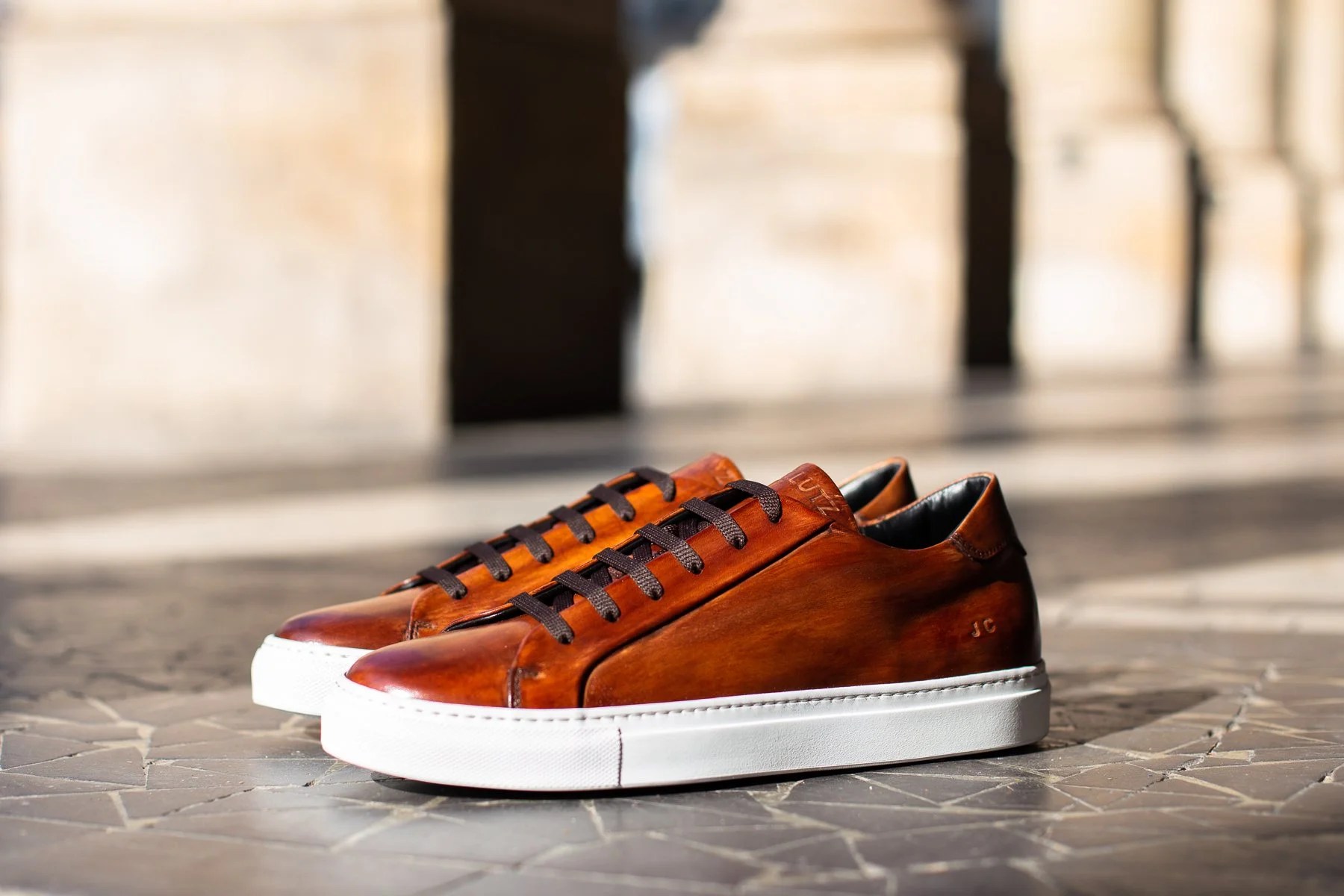
A clean leather sneaker has become one of the most useful shoes in a man’s wardrobe. It works with jeans and a field jacket on a Saturday, with chinos and an Oxford shirt at the office, and with a lightweight suit when the dress code relaxes. Because so many brands now make one, the differences between pairs, like the Italian-made leather sneakers produced by J.C. Lutz, are easy to miss on a product page. Two sneakers can share a silhouette, a color and even a price range, yet be built in very different ways.
The gap shows up in the details: How the leather is chosen and cut, how the pieces are stitched together, how the sole is attached, and whether the pair was made for a specific customer or pulled from a warehouse shelf. Knowing what to look for makes it easier to judge where the money in a pair actually goes.
The following is a guest post in partnership with J.C. LUTZ. Thanks for supporting the brands that support The Style Guide!
Where the shoe is made, and who makes it
“Made in Italy” on a label carries weight because of the shoemaking districts behind it. Le Marche, a region on Italy’s Adriatic coast, has been a center of shoe production for generations, and much of that work still happens in small family workshops where skills pass from one generation to the next. In a workshop like this, a pair moves through the hands of a few experienced craftsmen rather than along a long assembly line.
A factory pair is built for volume. Each station repeats one task as quickly as possible, and the result is a consistent shoe at scale. A handmade pair is built for control: the person cutting the leather sees every hide, and the person stitching the upper can adjust to how that particular leather behaves.
Leather that is selected and cut by hand
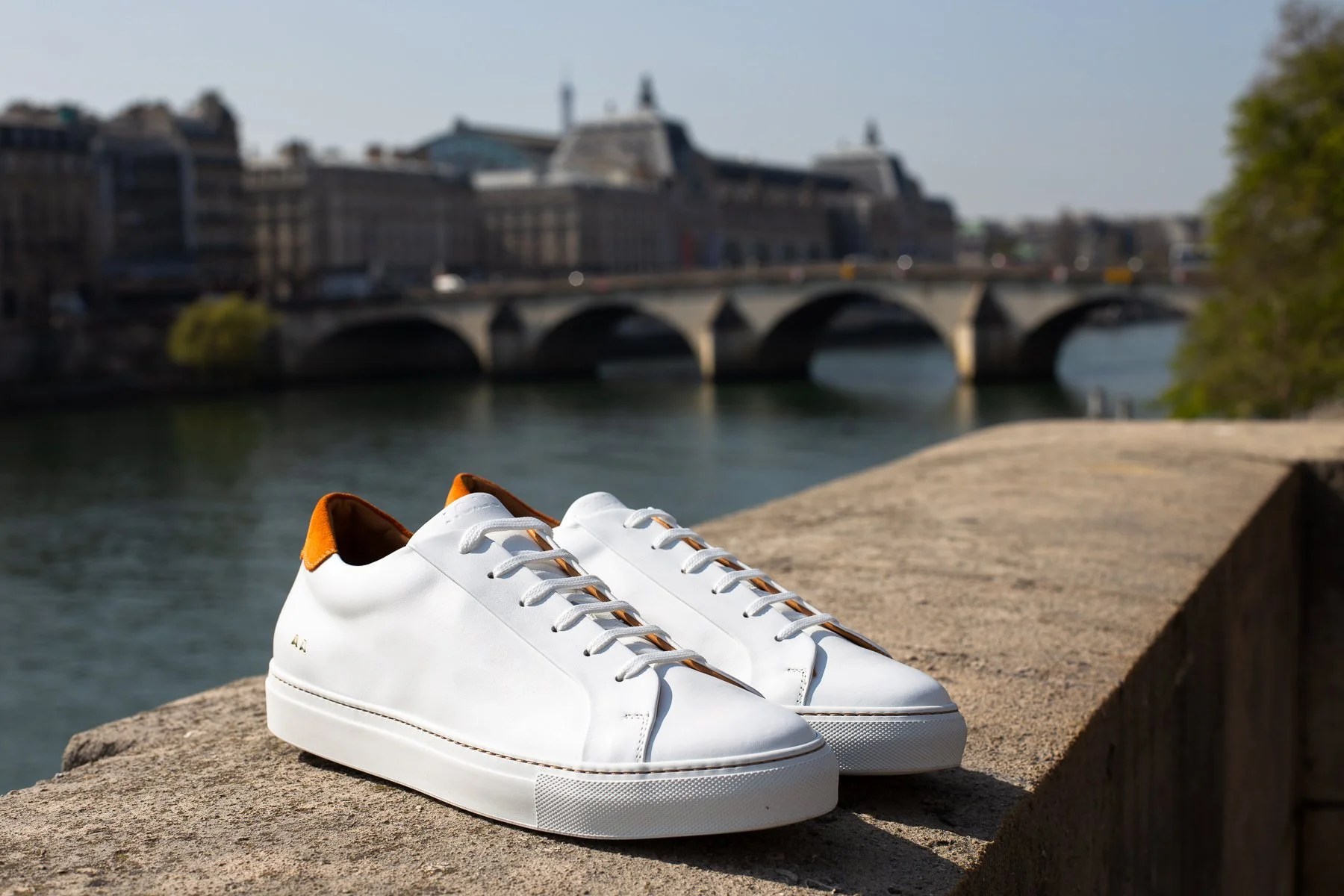
The first difference starts before any stitching. In a handmade process, each hide is inspected and cut by hand, a step the trade calls clicking. The cutter places each pattern piece around marks, scars and weaker areas of the hide, so the visible parts of the shoe come from the cleanest leather.
The type of leather then sets the character of the finished shoe:
- Full-grain leather keeps the complete grain surface of the hide and shows its natural texture. It is the most uncompromised choice.
- Calf with a corrected top grain has a smoother, more uniform surface, which suits a clean white or solid-color sneaker.
- Suede is worked from the underside of the hide, giving a soft, napped texture that reads more relaxed.
- Vegetable-tanned leather is tanned with plant-based tannins rather than chrome salts, and it takes on more character as it is worn.
Made to order instead of made for a warehouse
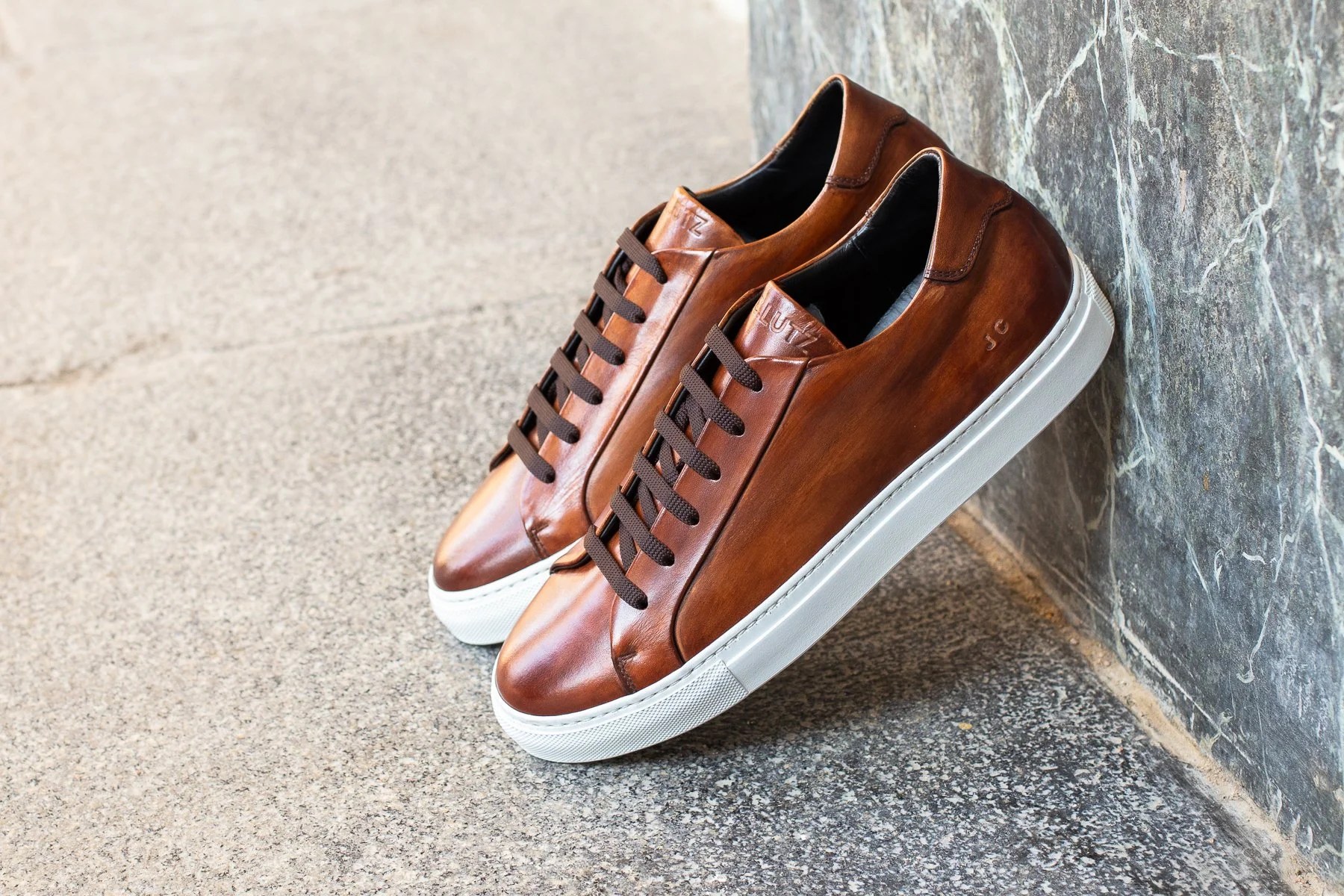
Most sneakers are produced in large batches, shipped to distributors and stored until they sell. A made-to-order pair is cut and stitched only after a customer places the order. That changes the shoe in two ways. The customer chooses the details, such as the leather and color for each panel, the stitching and the laces, and the workshop builds that exact pair. And the pair has not spent months in storage before it reaches its owner.
Selling directly to customers also shifts where the money goes. Without the margins of wholesalers, importers and retail stores, more of the price can go into materials and labor. J.C. LUTZ, a brand born in Paris whose made-to-order Italian leather sneakers are handcrafted in a family-run atelier in Le Marche, works this way: Each pair is built to the customer’s specifications in two weeks and shipped directly from the atelier.
The trade-off is time. A factory pair ships the same day, while a made-to-order pair needs a short wait while it is made. For a shoe meant to stay in regular rotation, that wait is a small part of the decision.
Construction details that are easy to skip
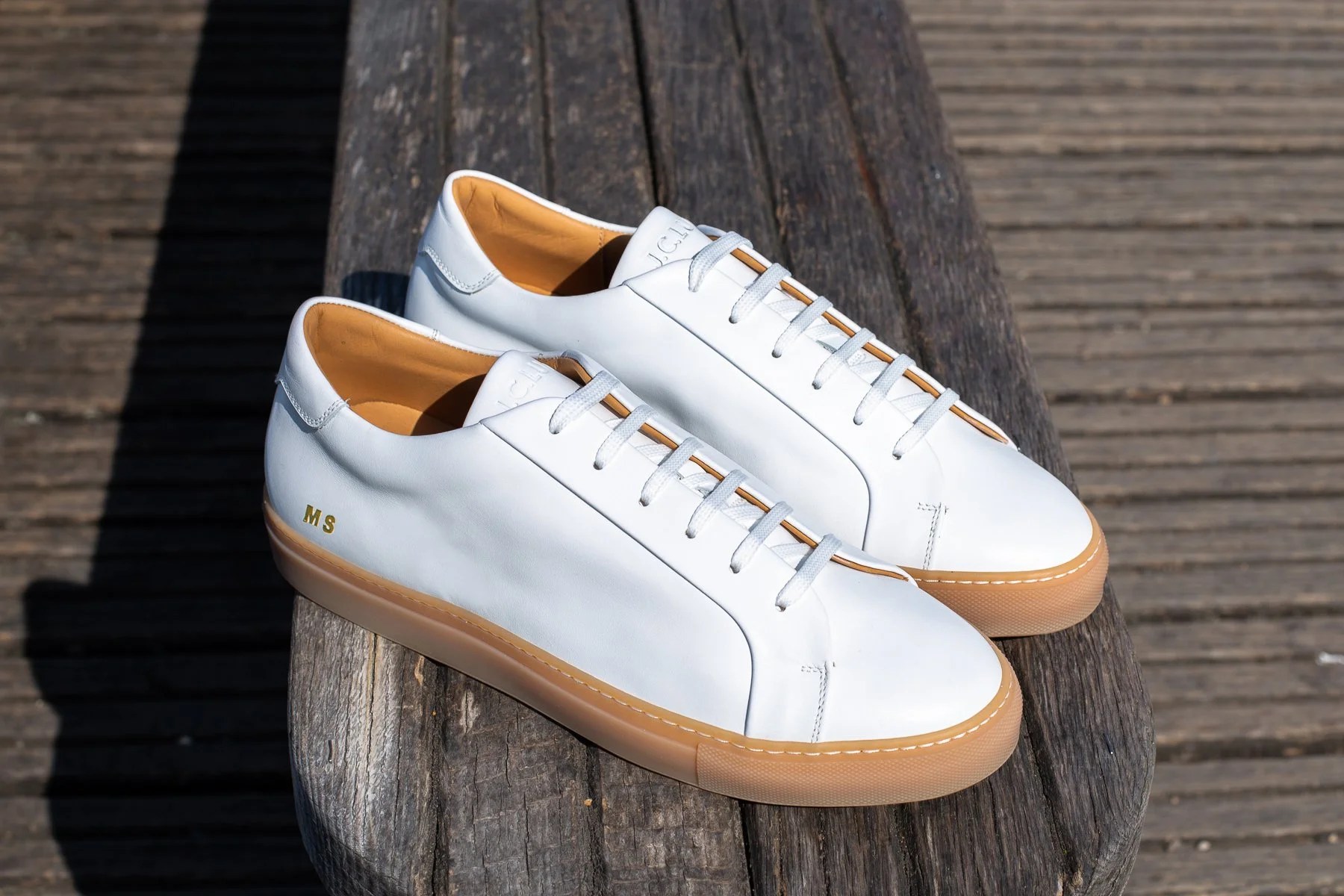
The upper of a leather sneaker is made of several panels, and the way they are joined says a lot about the pair. On a carefully made shoe, the edges are stitched together with the lining so no raw leather edge is visible, and details such as the lace guards are attached with stitching that does not show on the outer face of the shoe. The result looks cleaner up close.
Many mass-produced pairs leave edges raw or seal them with paint, and show every stitch line on the outside, because both are faster to produce. Neither is a flaw on its own, but they are among the easiest ways to tell how much handwork went into a shoe.
Underneath, most leather sneakers use a cupsole, a rubber sole with raised sidewalls that wraps around the bottom of the upper. On a well-made pair, the cupsole is joined cleanly to the midsole and upper, with no glue lines or gaps along the edge. A shank, a stiff support piece placed under the midfoot, adds structure beneath the arch. Some makers include one as standard, and it is worth asking about.
A sneaker comes down to five components: the leather upper, the lining, the footbed, the midsole and the outsole. Each one is a place where a maker can either invest or cut costs, and on a handmade pair all five are chosen together.
Spotting the difference in person
A few checks reveal most of what a product description leaves out:
- The edges of the leather panels: Folded or hidden-stitched edges point to more handwork than raw or heavily painted ones.
- The stitching on the outer face: Clean, even lines, or no visible construction stitching at all, are a good sign.
- The surface of the leather: Full-grain leather shows natural variation, while a perfectly even, plastic-like finish usually means a heavy coating.
- The inside of the shoe: A leather lining and a well-shaped footbed are signs of a more considered build.
- The join between sole and upper: It should be tight and even all the way around.
- The maker’s own description: Workshops that cut and stitch by hand usually say so, and they can name where each pair is made.
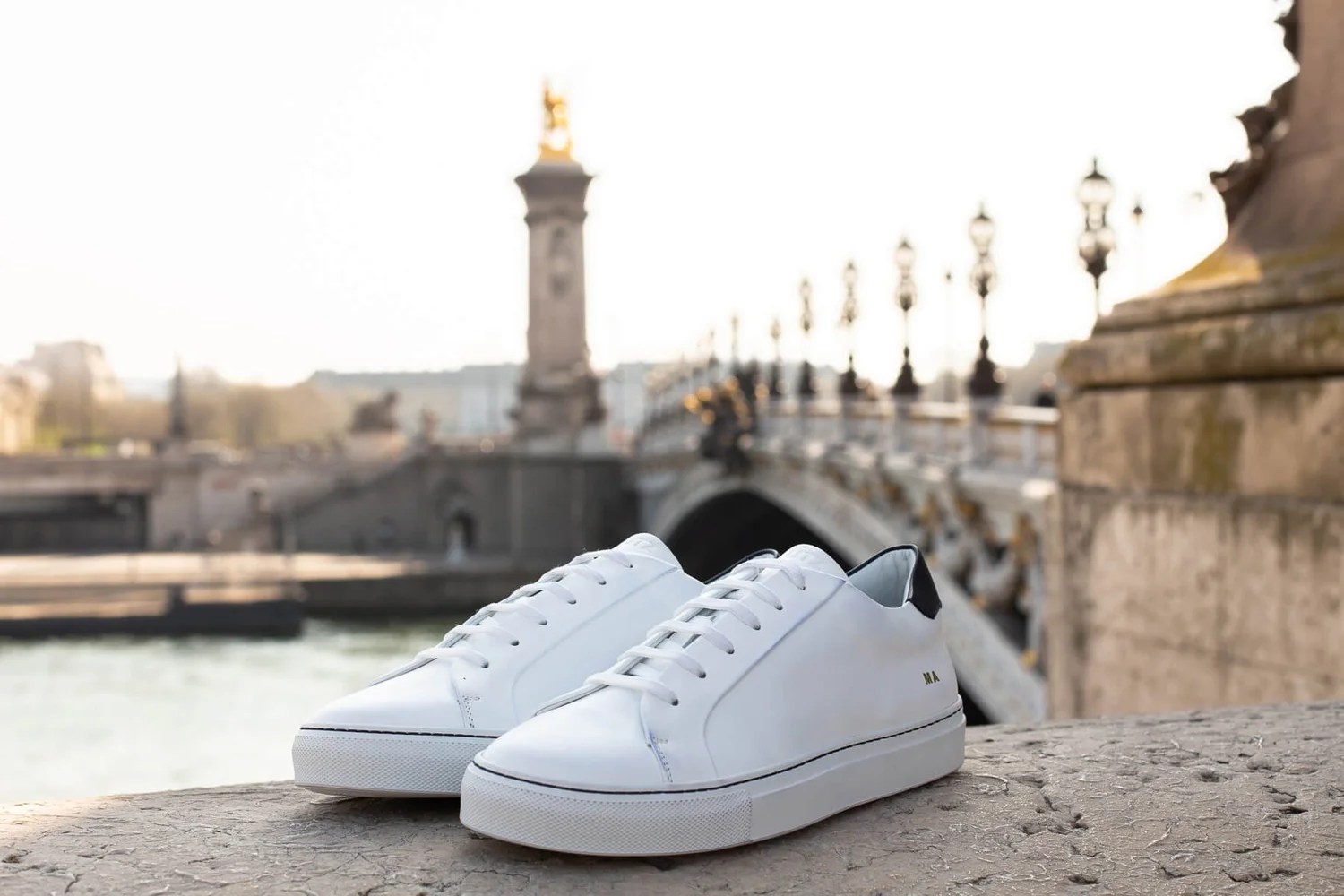
Styling a handmade leather sneaker
A well-made leather sneaker earns its place by working across a wide range of outfits:
- Weekend: A white calf pair with dark selvage denim, a heavyweight tee and a chore coat or field jacket.
- Office: Suede in a darker tone with grey wool trousers, an Oxford cloth button-down and a navy knit.
- Smart casual: A solid-color calf sneaker with an unstructured navy or olive suit, worn without a tie.
- Fall: Full-grain leather with chinos, a flannel shirt and a waxed jacket.
Trousers with a slim leg and little or no break keep the line clean and let the shoe show.
The Last Word
A factory sneaker and a handmade one can look alike in a photo. The difference sits in the parts that are hard to photograph: hand-cut leather, hidden seams, a cleanly attached sole, and a pair built for one owner. For a shoe that does as much work as a leather sneaker, those details are worth checking before buying.

